

Students Build
the Tools That Open Doors.
Makey Makey turns students into inventors of accessible technology — and gives occupational therapists, PTs, and SLPs a hands-on tool for therapeutic engagement. Real projects. Real impact.
DOCUMENTATION & COMPLIANCE
VPAT — Voluntary Product Accessibility Template
Section 508 & WCAG 2.1 conformance report. Required by AT coordinators and district purchasing.
IDEA Part B — Assistive Technology Eligibility
Qualifies as an assistive and educational technology purchase (34 CFR §300.105).
IEP & 504 Language Templates
Ready-to-insert language for AT and Supplementary Aids sections of legal plans.
Makers Who Build. Therapists Who Heal.
Makey Makey shows up in accessibility contexts in two distinct ways — and they reinforce each other.
Students as Assistive Technology Inventors
When students use Makey Makey to build input devices, communication aids, or adapted controllers for people with disabilities, they're practicing engineering empathy and producing tools with real-world impact. Any conductive material becomes an input — foil, Play-Doh, water, cardboard — so the barriers to building low-cost AT are almost zero.
- →Vest Buddy — 6th graders built a communication vest for a peer
- →DIY Big Mack Switch — cardboard + foil replaces a $100+ commercial switch
- →TalkBox — wheelchair-mountable AAC device prototyped from Makey Makey
- →Braille Calculator — tactile math interface with audio feedback
- →Hula Hoop Controller — full-body game controller for a student with cerebral palsy
Therapists Using Makey Makey as a Clinical Tool
OTs, PTs, and SLPs have adopted Makey Makey in school-based and clinical therapy settings. The low-barrier interface makes it possible to design therapeutic exercises around a student's existing abilities. Cause-and-effect is immediate, failure is impossible, and engagement is high.
- →Fine motor goal practice embedded in a creative activity
- →Gross motor coordination through adapted game controllers
- →Turn-taking and joint attention in SLP sessions
- →Sensorimotor engagement with varied textures and surfaces
- →Gamified PT exercises that maintain motivation over time
The World's Most Accessible Prototyping Tool.
Commercial assistive technology is expensive and inflexible. Makey Makey lets students and therapists build custom input devices tailored to one specific person's needs — for almost nothing.
Any Surface Becomes an Input
Students build switches and controllers out of foil, Play-Doh, fruit, water, or any conductive material. The device adapts to the user — not the other way around.
No Programming Required to Start
Connects via USB and behaves like a keyboard. Students can build a working AT prototype in a single session without code — or go deeper with Scratch.
Fraction of the Cost of Commercial AT
A commercial Big Mack switch costs $100–$150. A cardboard + foil Makey Makey equivalent costs under $1 in materials.
Immediate Cause-and-Effect Feedback
Touch surface → circuit closes → result happens instantly. Predictable, repeatable, and highly motivating for builders and users alike.
Real Students. Real Devices. Real Impact.
These aren't hypothetical activities — they're documented projects from students, educators, and therapists who built something that mattered.
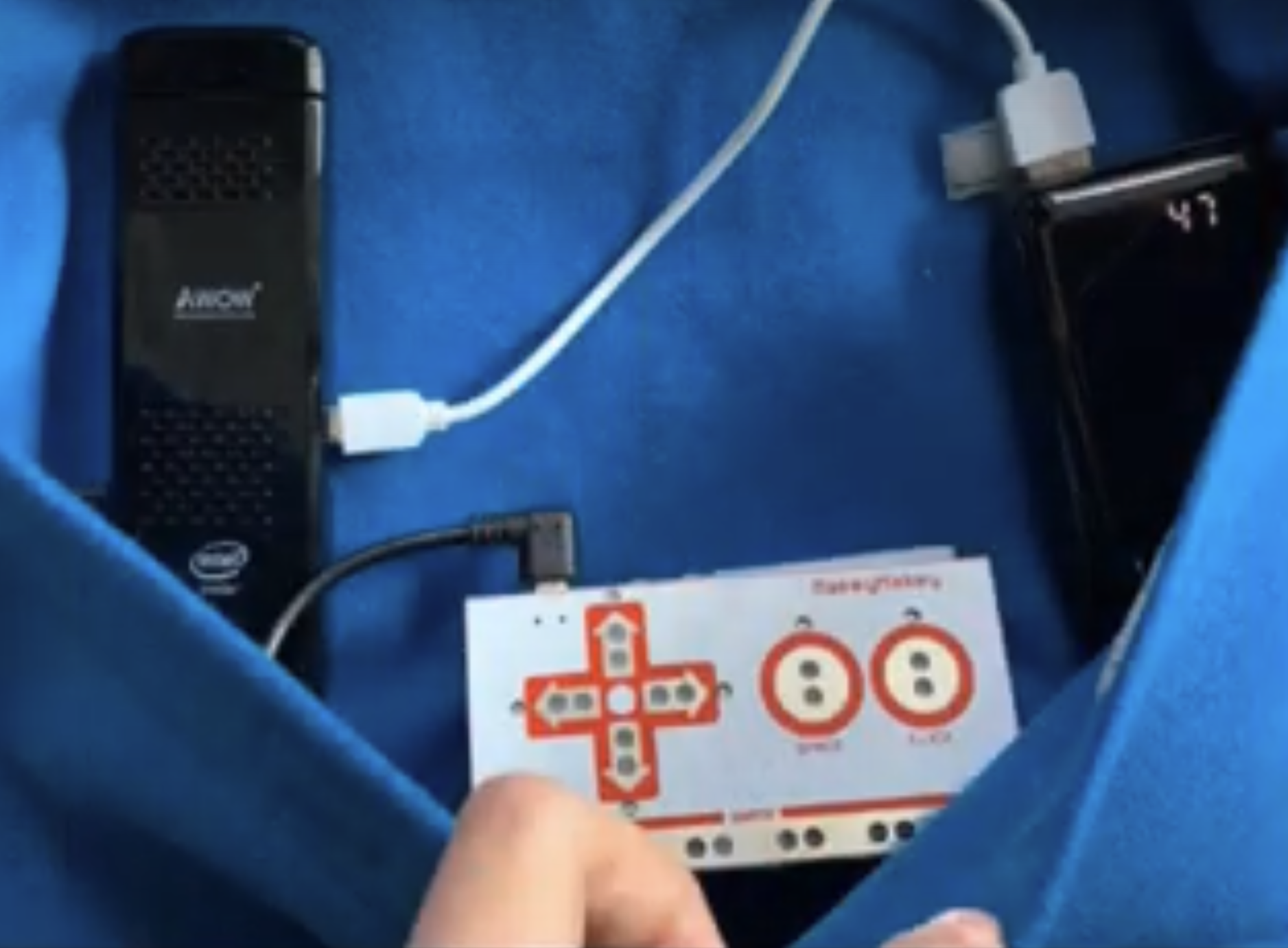
Vest Buddy
A group of 6th graders used Makey Makey and a Raspberry Pi to build an assistive technology vest for their classmate Justin, so he could communicate with teammates during soccer and recess.
Read the full story →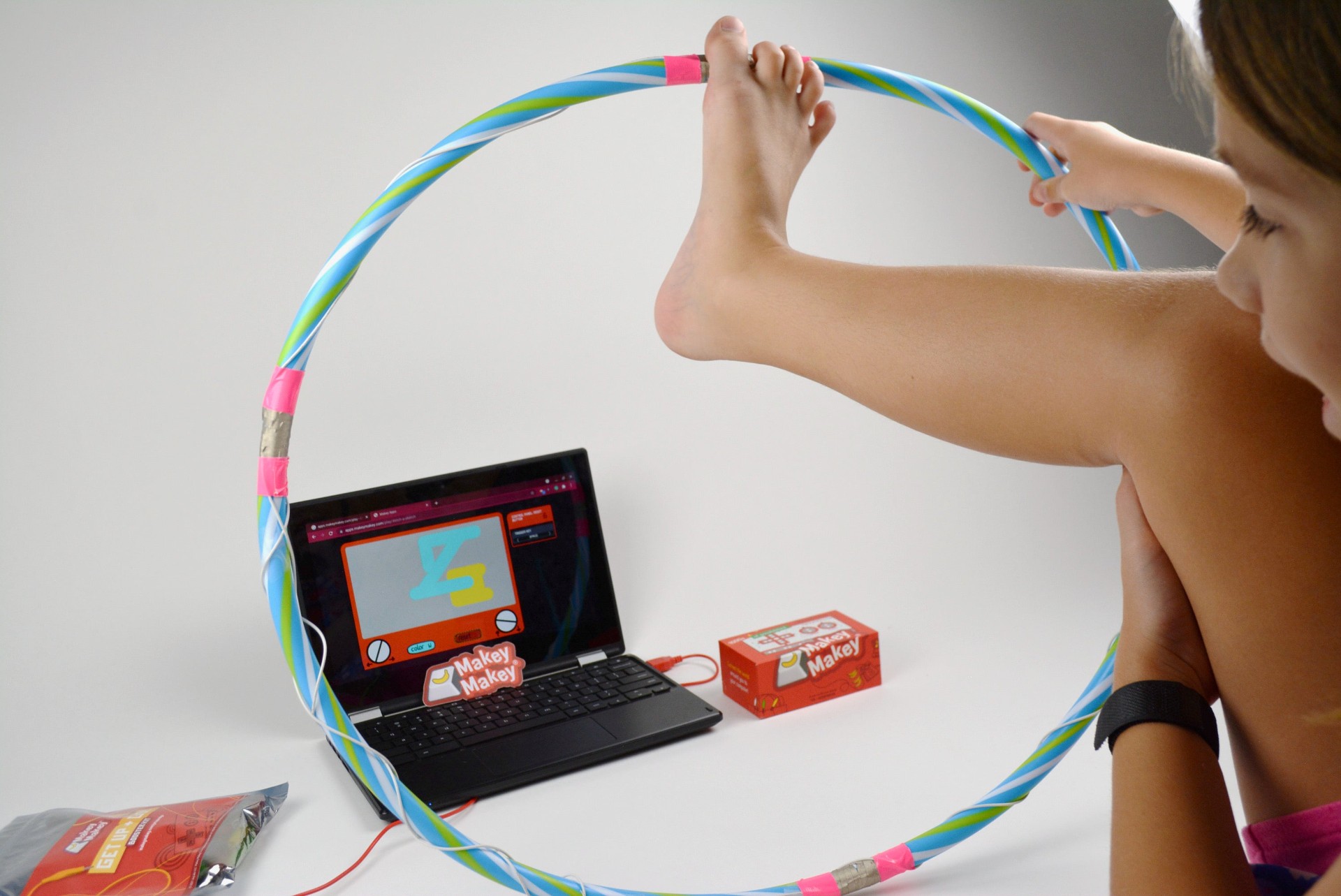
Hula Hoop Game Controller
OT Katie Butzu and Tech Integration Specialist Mark Lyons designed an oversized directional controller for a student with cerebral palsy needing gross motor coordination and reaching above shoulder level.
See the build →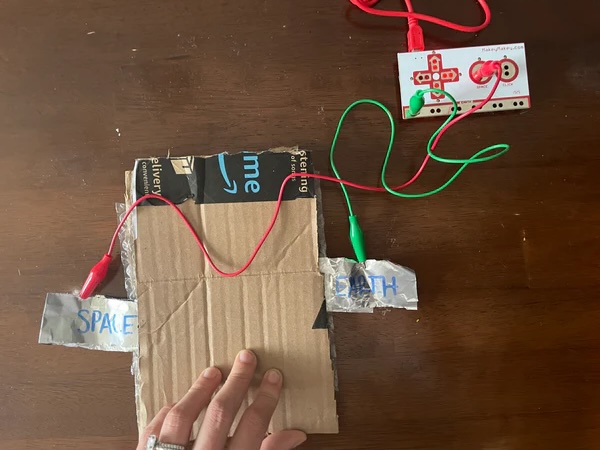
DIY Big Mack Switch
Katie Butzu's REMC-funded workshops taught disability professionals to build cardboard + foil switch alternatives. Commercial Big Mack switches cost $100–$150. This version costs under a dollar.
Build instructions →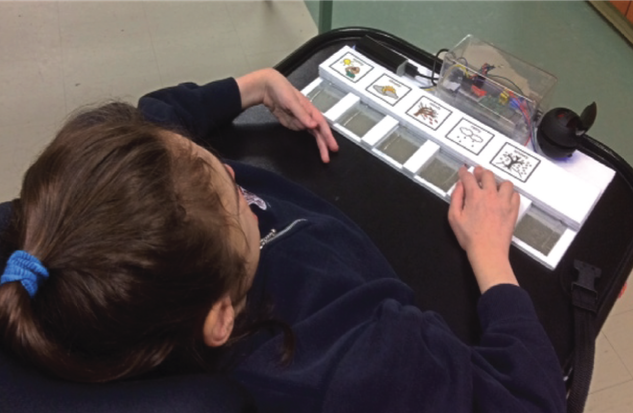
TalkBox — Wheelchair-Mounted AAC
Researchers prototyped TalkBox — an affordable, open-source communication board for users with speech disorders. It started as a Makey Makey prototype at the 2013 Toronto MakerFaire.
Published case study →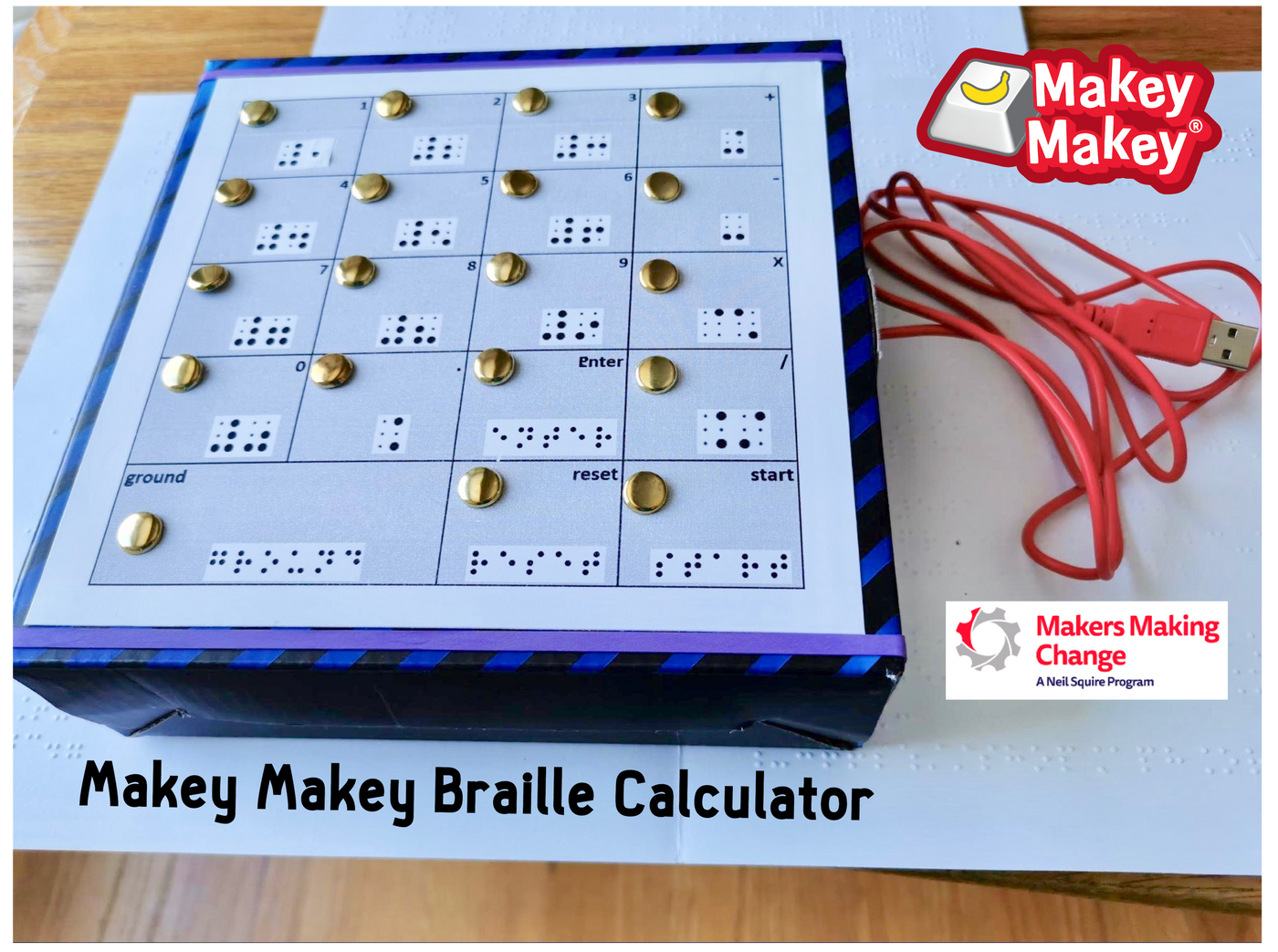
Braille Calculator
Tracy Zhang built a tactile math interface for visually impaired students: 3D-printed Braille keys connected to Makey Makey with a Scratch project providing audio feedback for every operation.
See the build →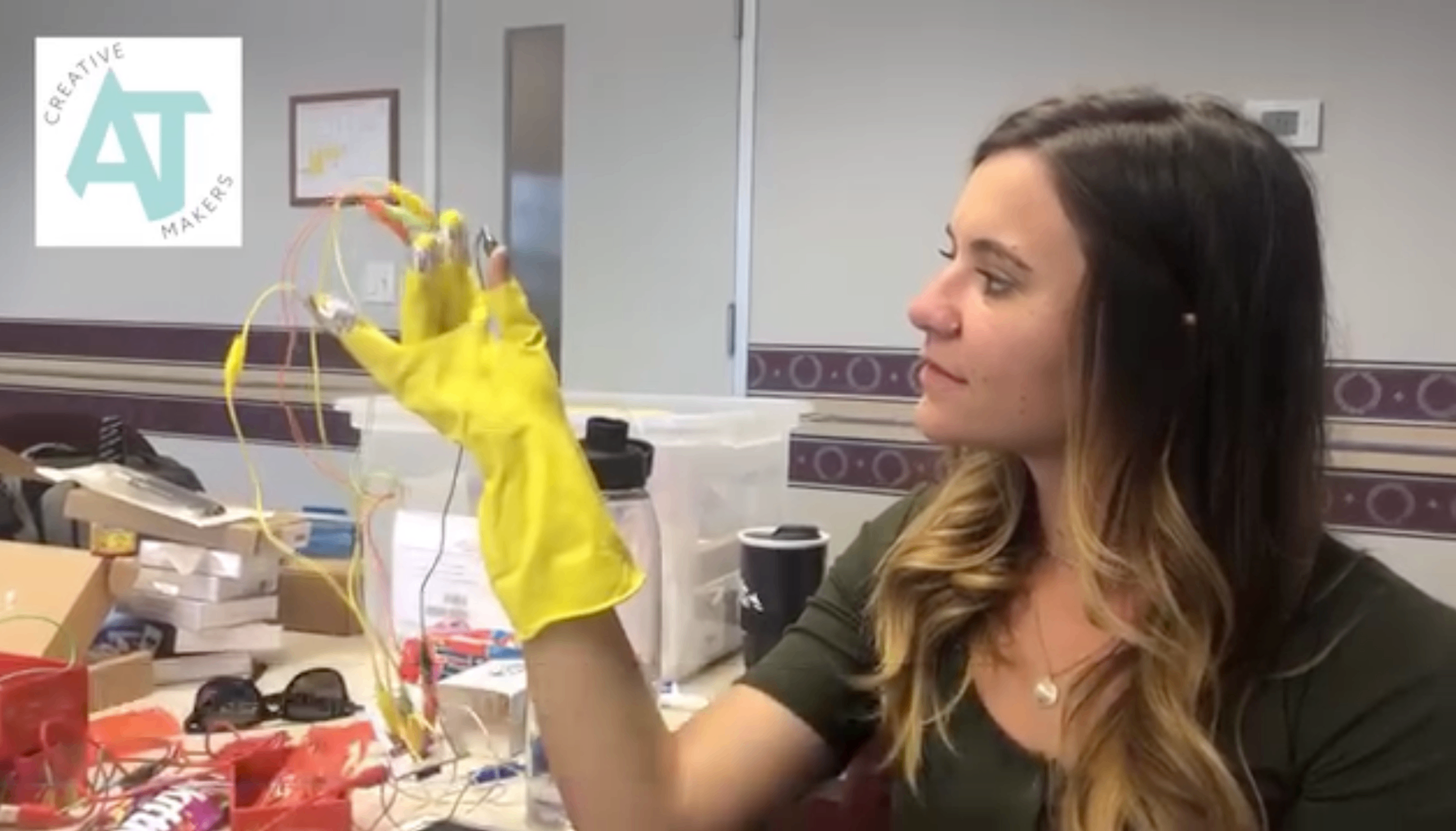
Makers Making Change Workshops
Makey Makey partnered with Makers Making Change (a Neil Squire program) to train disability professionals to build AT devices: music aids, voice-output devices, and low-vision accessible switches.
Read the partnership story →2024 Peer-Reviewed Study (XR Salento, Springer): Researchers compared Makey Makey, Tobii Eye Tracker 4C, and Leap Motion for computer engagement with people with disabilities. Makey Makey ranked highest in usability of the three.
Vest Buddy: Assistive Tech Built by Students, for a Classmate.
When Justin's classmates saw him struggling to communicate on the soccer field and at recess, they didn't wait for adults to solve it. Using Makey Makey and a Raspberry Pi, these 6th graders built Vest Buddy — an assistive communication vest that lets Justin press conductive patches to speak pre-recorded messages.
This is what happens when you give students the tools to create technology: empathy turns into engineering, and a classmate's challenge becomes a class project with real impact.
An Accessible Minecraft Controller Built for a Student.
When a student with limited mobility wanted to play Minecraft alongside classmates, educator Matt Richards used Makey Makey to build a custom controller. Large, conductive switches replace the standard keyboard inputs — making gaming accessible, social, and fun.
This project shows how Makey Makey transforms off-the-shelf materials into personalized assistive technology. No soldering, no coding — just creative problem-solving that puts the player first.
How OTs, PTs, and SLPs Use It in Practice.
Makey Makey has been adopted in occupational therapy, physical therapy, and speech-language sessions as a therapeutic engagement tool — not because it was designed for that, but because it works.
Occupational Therapists
Fine motor practice embedded in a creative activity. Students work toward OT goals — grip, press, reach — while building something that produces a result they can see and hear.
Physical Therapists
Targeted movement goals embedded in game play. The Hula Hoop Controller is the most documented example: a student-specific PT exercise disguised as a video game.
Speech-Language Pathologists
Turn-taking, joint attention, and cause-and-effect language activities. The circuit-closing action becomes the concrete anchor for communication practice.
AT Specialists & Disability Professionals
Prototype custom switch interfaces before committing to expensive commercial AT. Also a professional development tool — therapists learn to build devices in single-session workshops.
"We use Makey Makey as part of our therapeutic exercises. Students who resist traditional drills will engage with it for 20–30 minutes without prompting. The immediate feedback loop is exactly right for the population we serve — and I can build a custom switch for a specific student in under an hour."
— Occupational Therapist, School-Based Practice, Bay Arenac ISD, Michigan
[Replace with real testimonial before publishing.]
ABOUT KATIE BUTZU & MARK LYONS
OT Katie Butzu and Technology Integration Specialist Mark Lyons founded the Creative Makers project at Bay Arenac ISD in Michigan. After REMC awarded them a grant to run Makey Makey workshops for disability professionals, they partnered with Makey Makey and Makers Making Change (a Neil Squire program) to teach OTs, PTs, and SLPs how to build their own low-cost AT.
Read their story →Which Context? Which Kit?
Makey Makey works from one-on-one therapy to full maker program deployment.
Therapy Room — 1:1 OT, PT, SLP Sessions
The simplest deployment. One board, one student, one therapist. Configure the input surface around the student's specific motor profile and therapeutic goals.
- → Fine motor — student presses foil pad to trigger audio feedback
- → Reach & grasp — PT positions pad to require a specific movement
- → Turn-taking — SLP sets up two pads, student and therapist alternate
- → Cause-and-effect language: "What happened when you touched it?"
- → Sensorimotor: circuit-closing through Play-Doh, water, textured materials
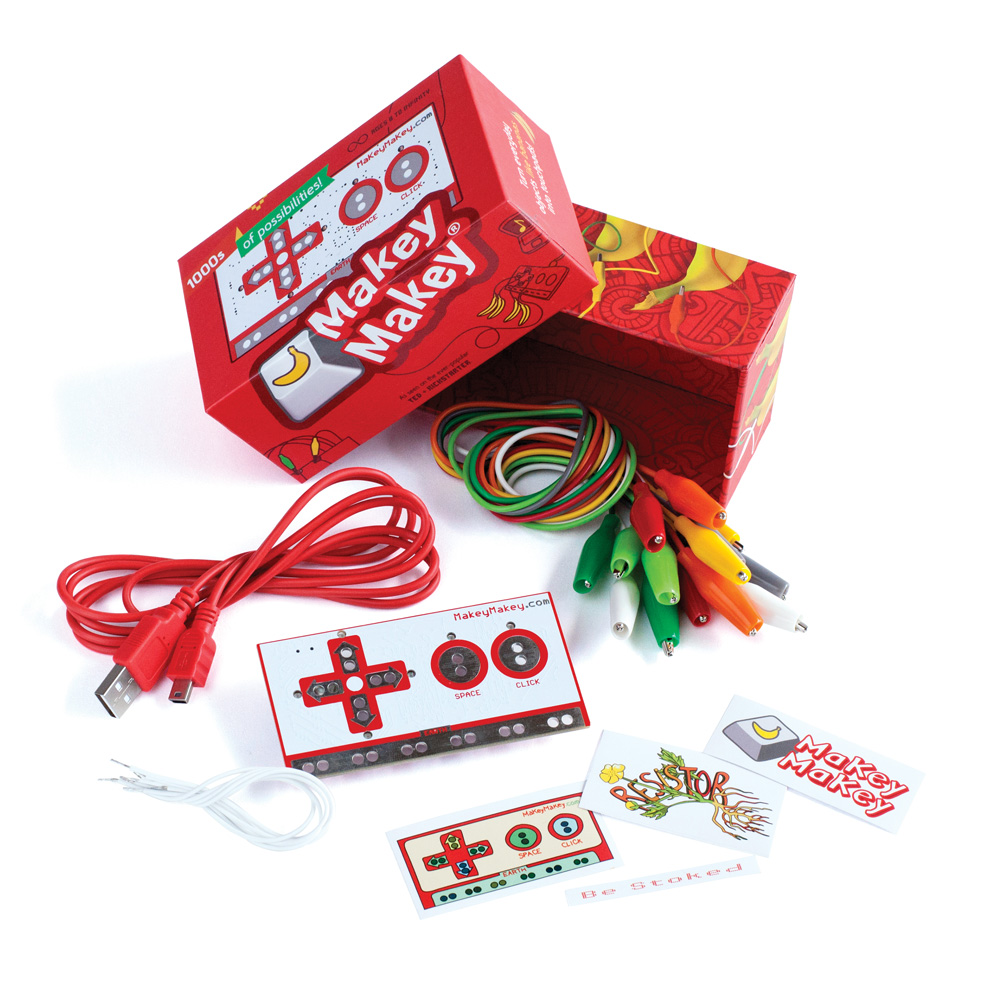
Makey Makey Classic
One board, six alligator clips, USB cable. Everything needed for individual sessions.
IEP & 504 Language — Ready to Insert.
For therapists and educators purchasing Makey Makey for therapeutic use or as part of an AT program — these templates document the purchase and program within a student's legal plan.
IEP — Assistive Technology & Supplementary Services
Covers therapeutic sessions or AT-building activities tied to IEP goals.
504 Plan — Classroom & Program Accommodation
Covers access to Makey Makey-based AT activities and therapeutic sessions.
How to Fund It.
Makey Makey qualifies under multiple federal funding streams designed for assistive and educational technology.
IDEA Part B
$14.1B+
Funds AT tools and services required to implement a student's IEP. Makey Makey qualifies under the AT category (34 CFR §300.105) when used in a documented therapeutic or AT-building program.
Most direct pathway. Requires AT language in the IEP.
Title I — Supplemental Enrichment
Varies
Supports supplemental educational services and instructional technology in Title I qualifying schools (40%+ free/reduced lunch).
Campus-level funds — speak with your Title I coordinator.
State SpEd Technology Grants
State-Specific
Many state education agencies offer dedicated SpEd technology grant programs.
Cycles typically open August–October.
E-Rate Program
Up to 90%
FCC discounts on educational technology for qualifying schools. Hardware used in direct support of educational technology programs may qualify under Category 2.
Confirm eligibility with your E-Rate coordinator.
Grant Talking Points PDF
Pre-written justification language for IDEA Part B and Title I grant applications.
Download Everything You Need.
Documentation for AT coordinators, purchasing offices, and IEP teams.
VPAT
Section 508 / WCAG 2.1 conformance report. Required by district purchasing and AT evaluations.
COMING SOONIEP Language Template
Ready-to-insert language covering therapeutic and AT-building program contexts.
Download Template504 Accommodation Template
Program access and participation language for Section 504 plans.
Download TemplateGrant Talking Points PDF
IDEA Part B and Title I justification language with cost analysis.
COMING SOONAT Effectiveness Research Summary
Plain-language summary of 2024 Springer study plus prior research; formatted for sharing with administrators.
COMING SOONMakey Makey AT & Accessibility Blog
Existing case studies and community contributions from special educators and therapists.
Read the Blog →Get a District Quote
For special education coordinators, AT specialists, and district purchasing. Includes volume pricing, PO processing, and program support.
Request a QuoteDownload the AT Documentation Pack
VPAT, IEP template, 504 language, and grant talking points — bundled for AT team review and district approval.
Download All DocumentsStart a Maker AT Project
Ready to run a student AT-building unit? Browse lesson plans, project guides, and Scratch resources built around accessibility themes.
Explore Lessons →XR Salento 2024 / Springer — Makey Makey vs Tobii Eye Tracker vs Leap Motion
https://link.springer.com/chapter/10.1007/978-3-031-71704-8_3
Hamidi et al. — DIY AT Communication Board Case Study
https://link.springer.com/chapter/10.1007/978-3-319-08599-9_44
Vest Buddy — Makey Makey Blog
https://makeymakey.com/blogs/blog/vest-buddy-update-empathetic-students-use-makey-makey-to-create-assistive-tech/
Makers Making Change / Katie Butzu & Mark Lyons
https://makersmakingchange.com/occupational-therapist-and-technology-integration-specialist-lower-the-cost-of-at-in-michigan/
IDEA Part B §300.105
https://sites.ed.gov/idea/
Makey Makey Accessibility Blog
https://makeymakey.com/blogs/blog/assistive-technology-occupational-therapy-and-more-accessibility-resources
WCAG 2.1
https://www.w3.org/TR/WCAG21/
E-Rate (FCC)
https://www.fcc.gov/general/e-rate-schools-libraries-usf-program