Any Surface Becomes an Input
Students build switches and controllers out of foil, Play-Doh, fruit, water, or any conductive material. The device adapts to the user — not the other way around.
STEM within reach
Makey Makey turns bananas, Play-Doh, and paper into controllers — so every student can invent, code, and create. No coding experience, no barriers, no one left out.
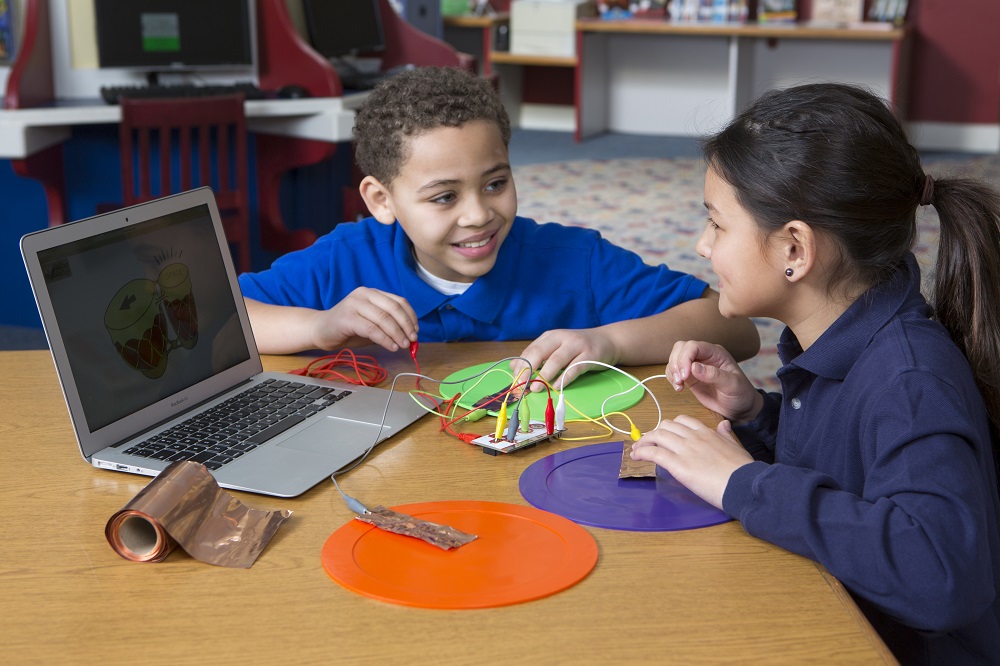
WHY IT WORKS
Commercial assistive technology is expensive and inflexible. Makey Makey lets students and therapists build custom input devices tailored to one specific person's needs — for almost nothing.
Students build switches and controllers out of foil, Play-Doh, fruit, water, or any conductive material. The device adapts to the user — not the other way around.
Connects via USB and behaves like a keyboard. Students can build a working prototype in a single session without code — or go deeper with Scratch.
A commercial Big Mack switch costs $100–$150. A cardboard + foil Makey Makey equivalent costs under $1 in materials.
Every closed circuit produces an immediate, repeatable response. Predictability lowers anxiety and supports learners who need consistent feedback.
STEM for girls
Confidence beats intimidation. Because there's no wrong way to start and no code to fear, Makey Makey invites girls into STEM through creativity, storytelling, art, and music — then bridges naturally into engineering and coding. Show, don't gatekeep.
See creative STEM projects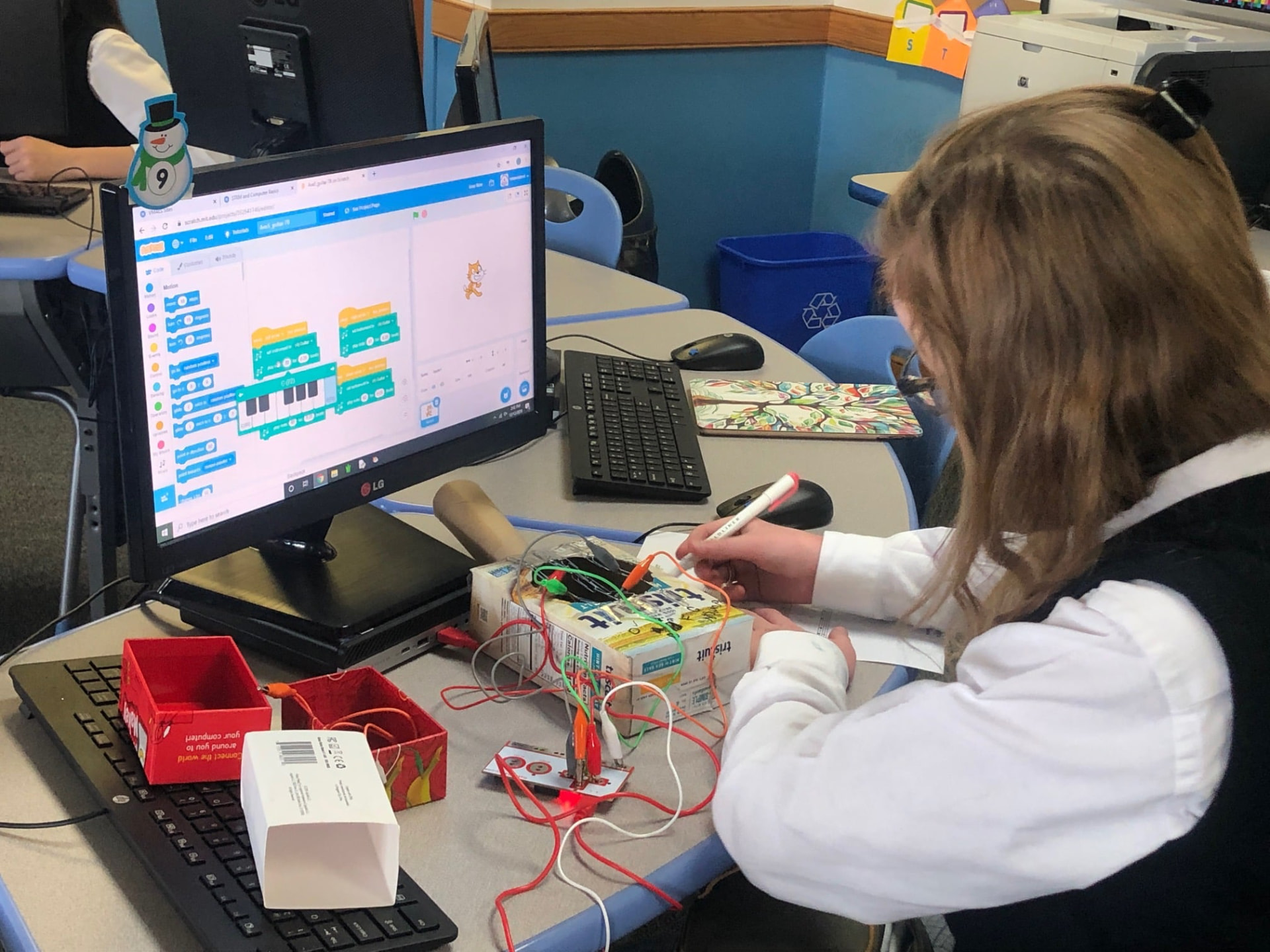
Peer-Reviewed · Springer 2025
A three-year study of the "Makers a les Aules" program found that Makey Makey produced stronger STEM confidence gains for girls than for boys. The differences were large enough to be educationally meaningful and unlikely to be due to chance — meaning the program genuinely shifted how girls saw themselves as designers, scientists, and technology users.
Girls shifted from uncertainty to belief in their own ability to design technological inventions. The program helped them see themselves as capable creators rather than passive consumers of technology.
The strongest change appeared in girls' willingness to ask for and seek out science information on their own — a key signal that they were beginning to identify as scientists.
Girls' confidence in their technology abilities grew meaningfully — and this improvement was significantly larger than the gains shown by boys participating in the same program.
"The 'Makers a les Aules' sessions had a more positive overall impact on girl students — not only because girls showed significant improvements on a greater number of items, but also because the magnitude of those improvements was larger compared to boys."
— Santos et al. (2025), International Journal of Technology and Design Education, Springer Nature
Read the Full Study (Open Access) →For occupational therapists
OTs choose Makey Makey to accommodate a wide range of learning, physical, and behavioral abilities. Build custom switches and adaptive controls from everyday materials to work on motor skills, cause-and-effect, and engagement — while students think they're just playing.
Explore adaptive activities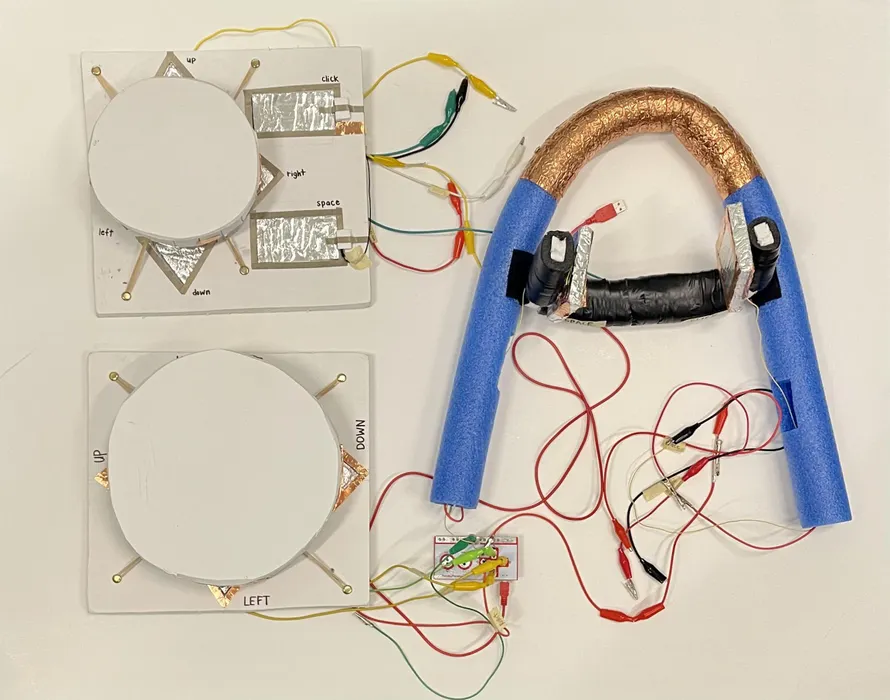
For physical disabilities
Because any conductive object can become a button, inputs adapt to the student — not the other way around. Make large, low-force, or custom-placed controls so students with limited mobility can fully participate.
Build a custom controller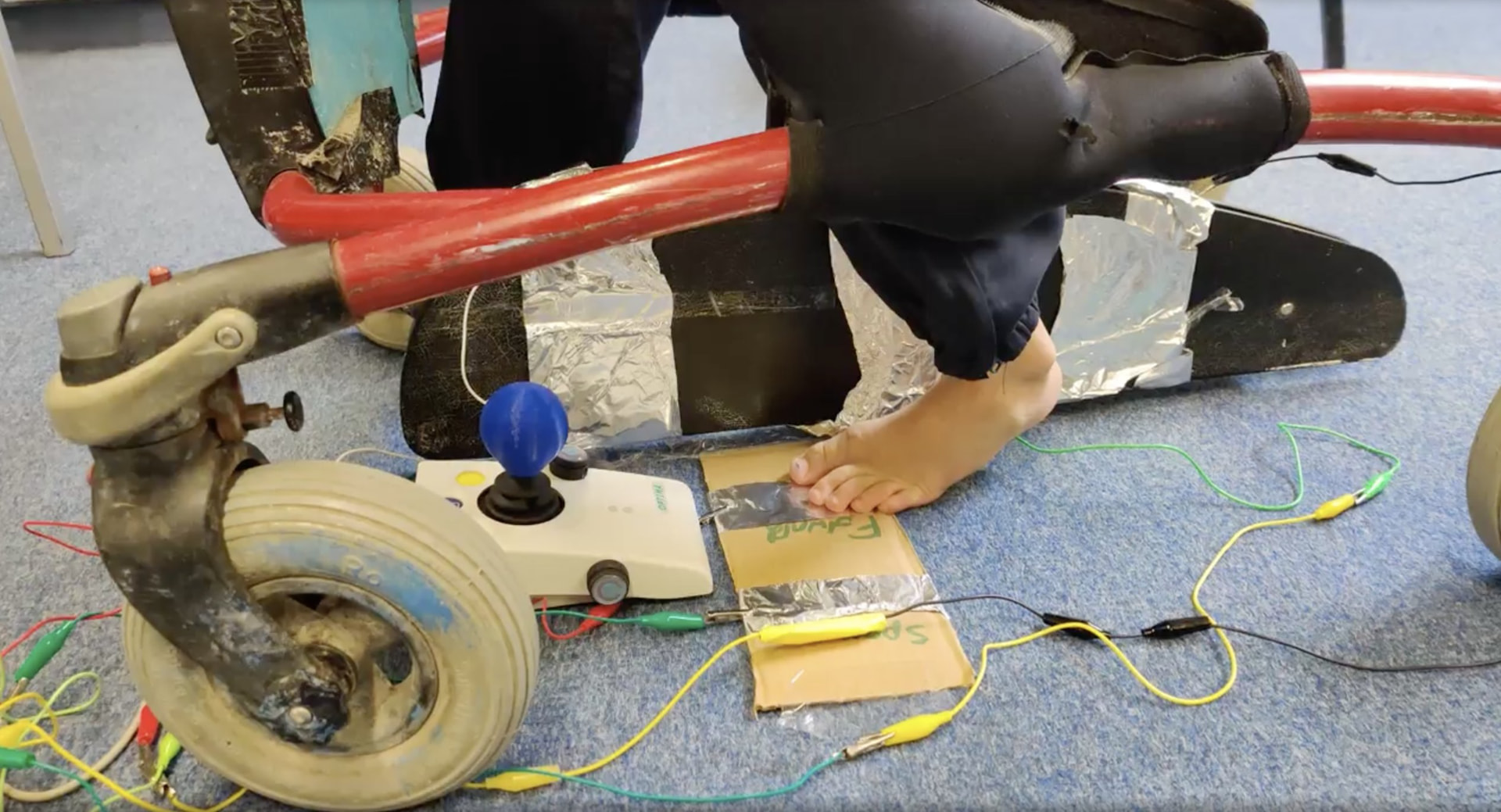
Learning & cognitive differences
Immediate, multi-sensory feedback keeps attention and lowers frustration. Open-ended projects let students work at their own level, and early wins build the confidence to keep going. Favored by instructors engaging a diversity of learning styles.
Browse inclusive lessons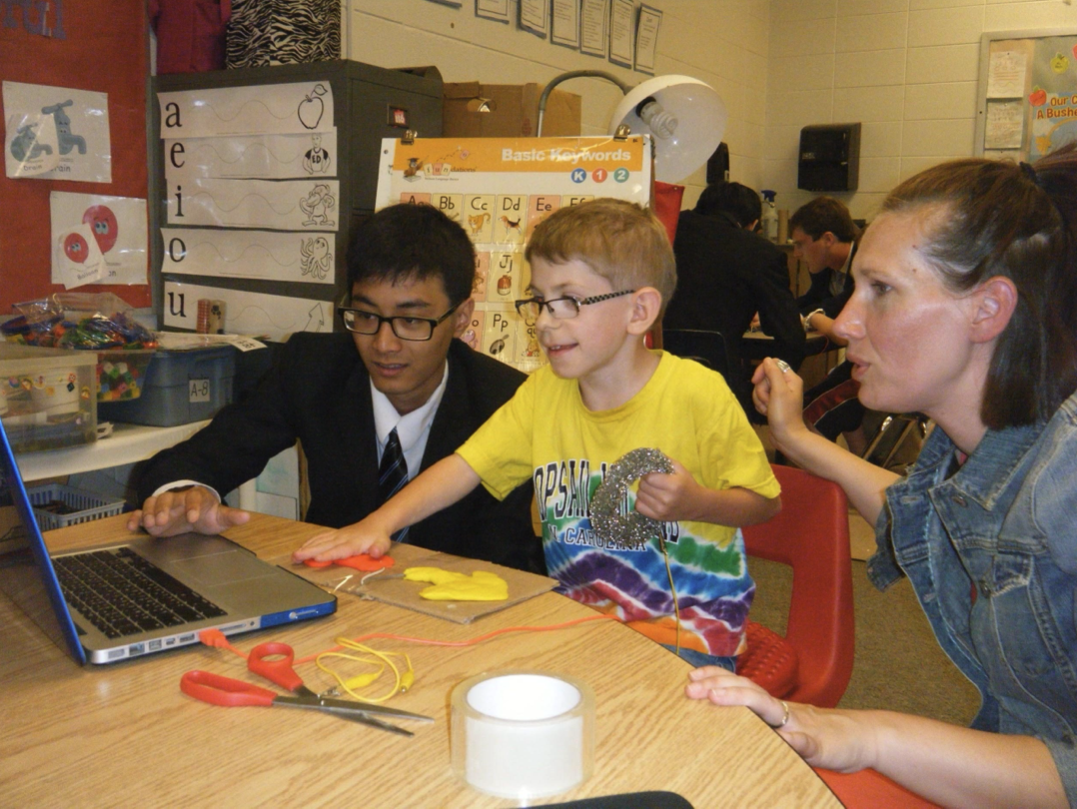
For everyone
One kit, one classroom, every learner included — together. Makey Makey is designed so a whole class of different abilities can invent side by side. The future should be built by everyone.
Bring it to your classroom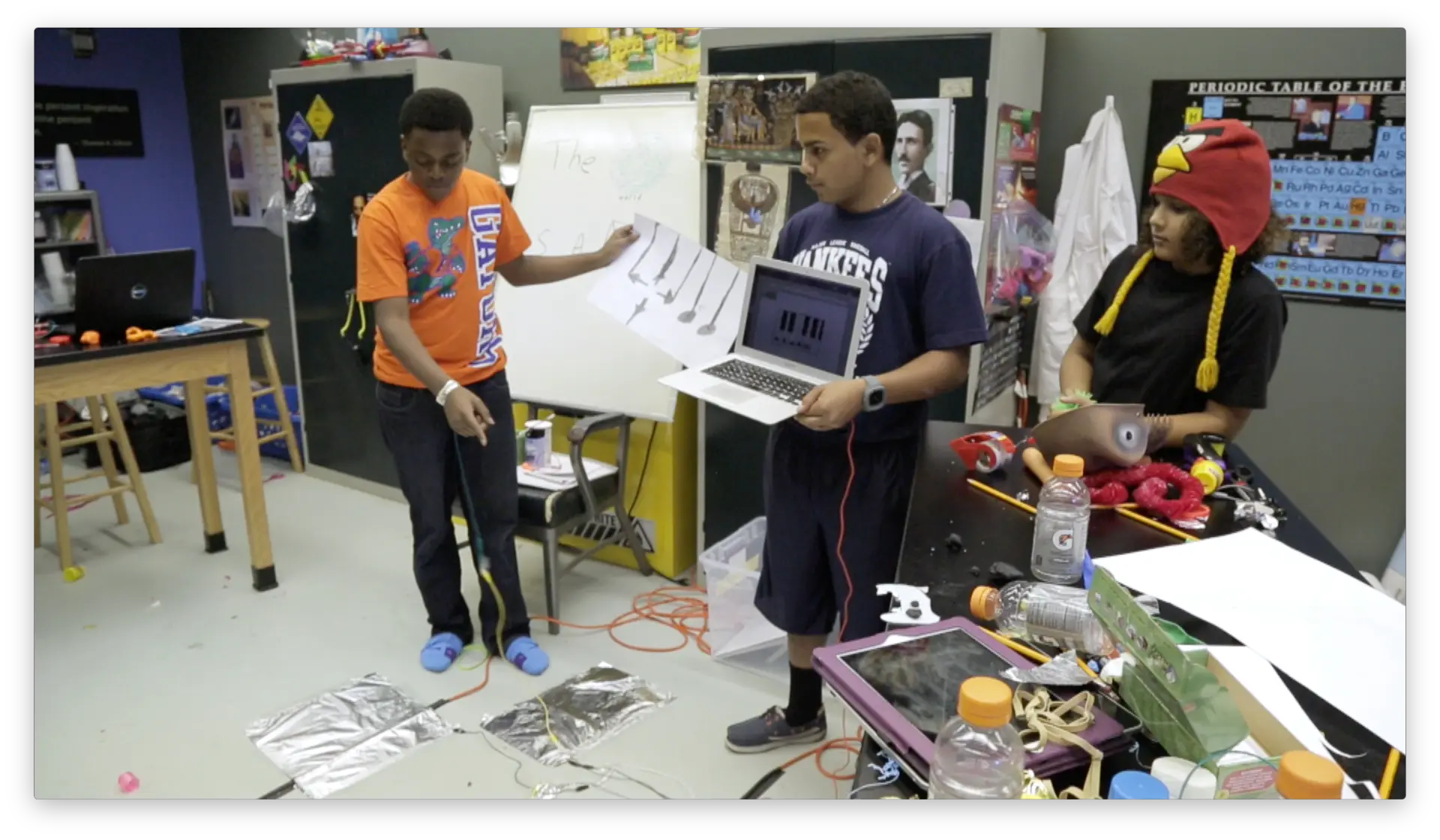
Touch, craft, and build with real materials — great for kinesthetic and tactile learners.
Alligator-clip to any object and go. Success in the first five minutes builds confidence.
Large touch targets, adaptable inputs, and remappable keys work for a wide range of physical and cognitive needs.
Start with play (piano on bananas), grow into Scratch and real coding at each student's pace.
DOCUMENTED PROJECTS
These aren't hypothetical activities — they're documented projects from students, educators, and therapists who built something that mattered.
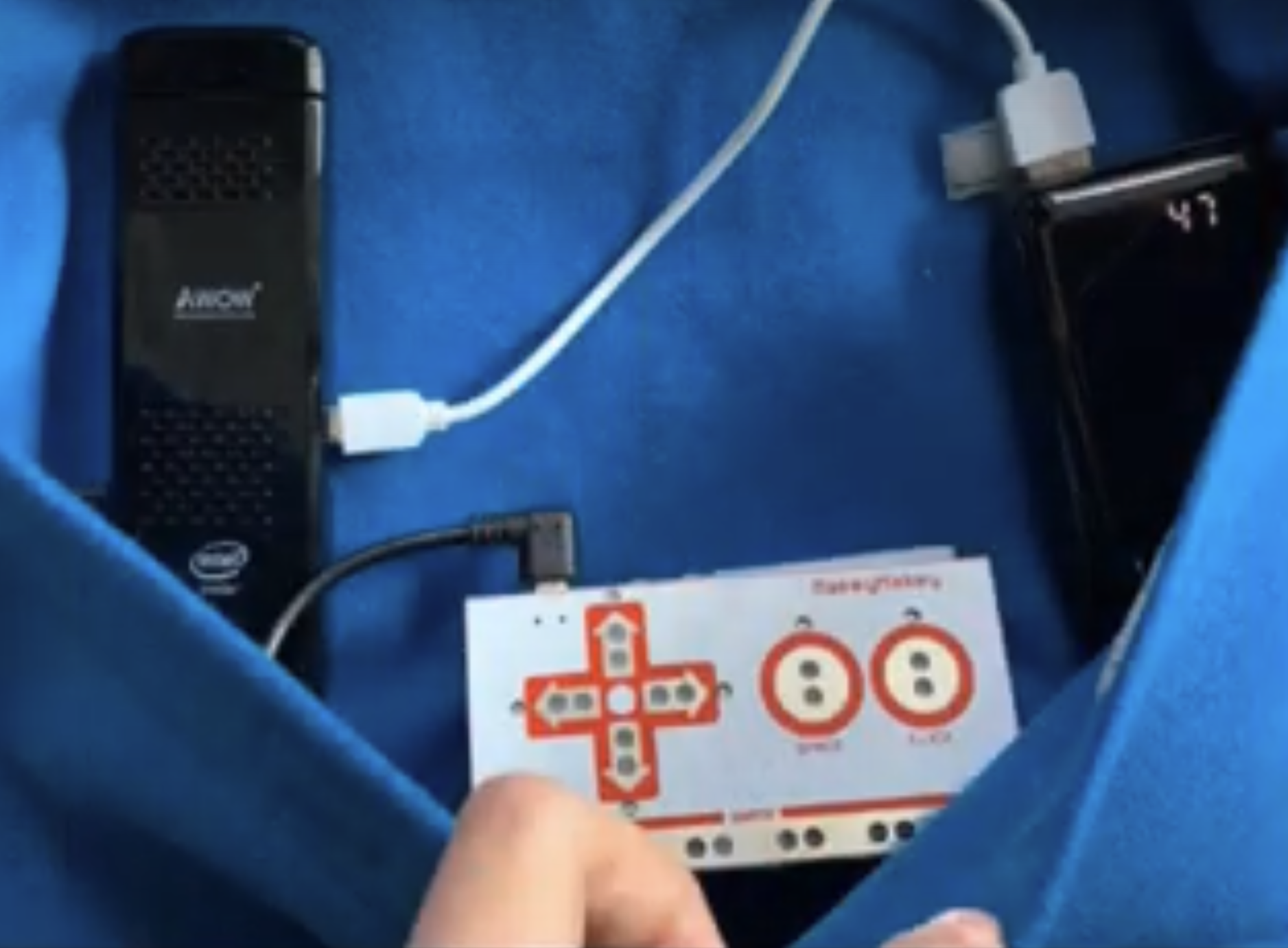
A group of 6th graders used Makey Makey and a Raspberry Pi to build an assistive technology vest for their classmate Justin, so he could communicate with teammates during soccer and recess.
Read the full story →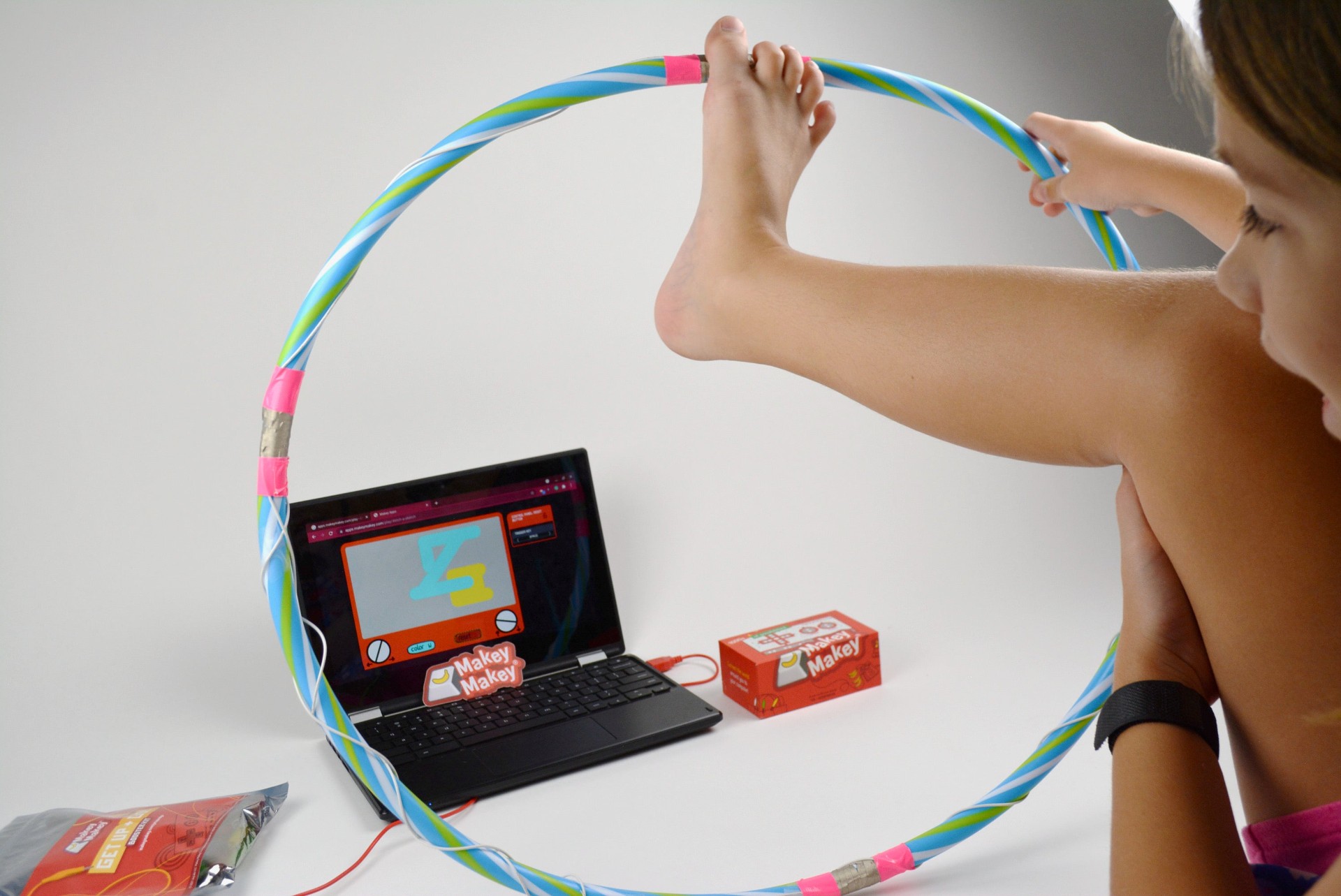
OT Katie Butzu and Tech Integration Specialist Mark Lyons designed an oversized directional controller for a student with cerebral palsy needing gross motor coordination and reaching above shoulder level.
See the build →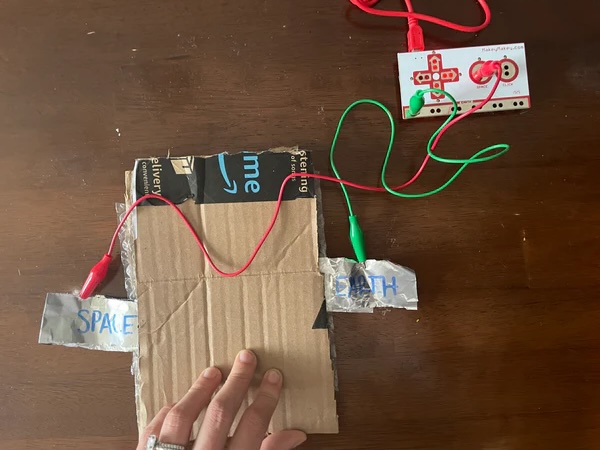
Katie Butzu's REMC-funded workshops taught disability professionals to build cardboard + foil switch alternatives. Commercial Big Mack switches cost $100–$150. This version costs under a dollar.
Build instructions →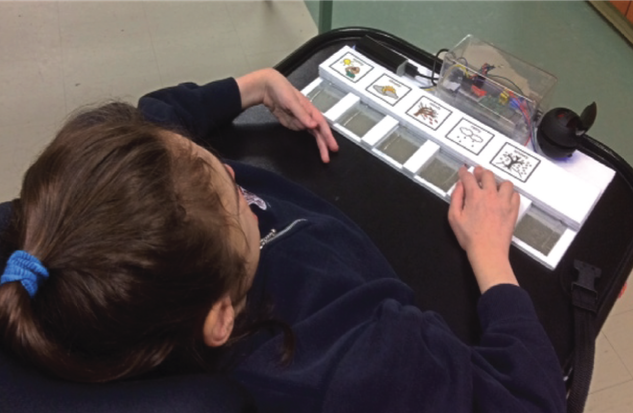
Researchers prototyped TalkBox — an affordable, open-source communication board for users with speech disorders. It started as a Makey Makey prototype at the 2013 Toronto MakerFaire.
Published case study →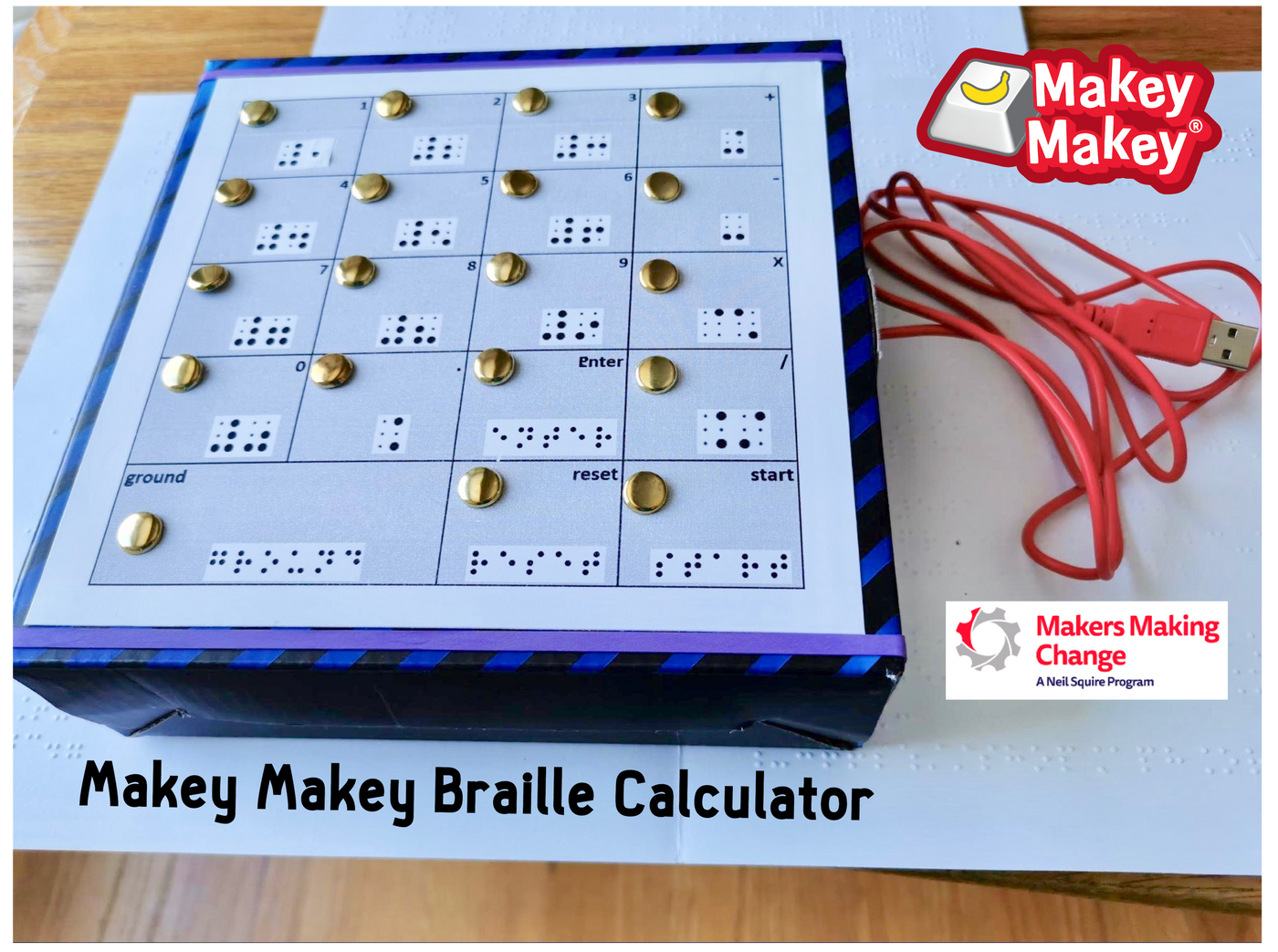
Tracy Zhang built a tactile math interface for visually impaired students: 3D-printed Braille keys connected to Makey Makey with a Scratch project providing audio feedback for every operation.
See the build →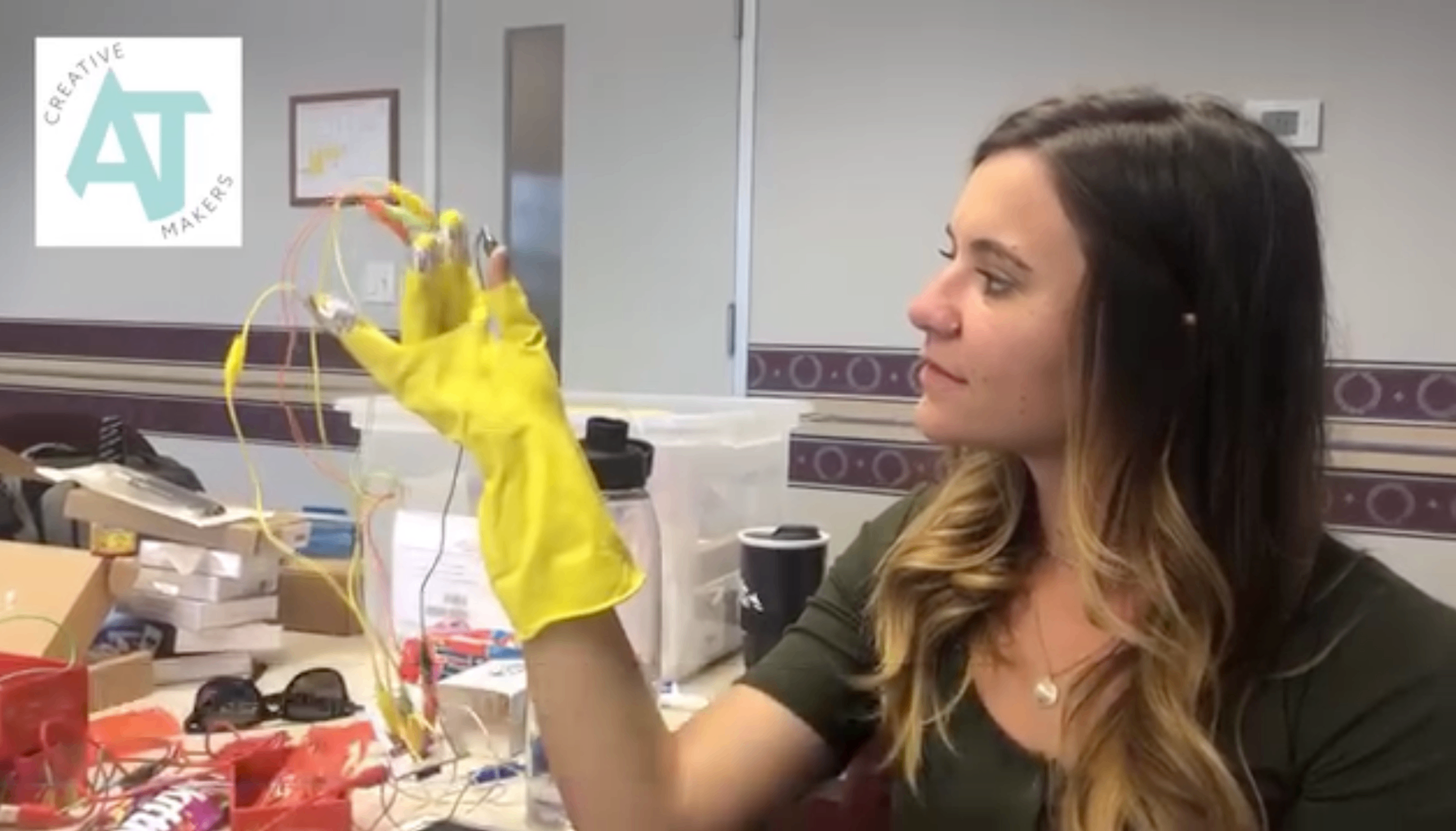
Makey Makey partnered with Makers Making Change (a Neil Squire program) to train disability professionals to build AT devices: music aids, voice-output devices, and low-vision accessible switches.
Read the partnership story →2024 Peer-Reviewed Study (XR Salento, Springer): Researchers compared Makey Makey, Tobii Eye Tracker 4C, and Leap Motion for computer engagement with people with disabilities. Makey Makey ranked highest in usability of the three.
FEATURED STUDENT PROJECT
When Justin's classmates saw him struggling to communicate on the soccer field and at recess, they didn't wait for adults to solve it. Using Makey Makey and a Raspberry Pi, these 6th graders built Vest Buddy — an assistive communication vest that lets Justin press conductive patches to speak pre-recorded messages.
This is what happens when you give students the tools to create technology: empathy turns into engineering, and a classmate's challenge becomes a class project with real impact.
Invented at the MIT Media Lab's Lifelong Kindergarten group. Used by teachers, librarians, and therapists worldwide. Thousands of free lessons and projects.
"I am using it with a handicapped student I work with. She loves it! It has encouraged her to interact with her art projects, which is what I was hoping for."
— Teacher
"I can build a switch that fits a student in minutes — not months."
— Occupational therapist
"My daughter said, 'I invented something today.' That was everything."
— Parent
Start with the Makey Makey Classic (US$51.95) or outfit a whole classroom with the STEM Pack (US$724.95).
Explore hundreds of free, inclusive STEM lessons and activities you can use tomorrow.
Get Free Lessons & Activities