Classroom Efficacy Research
More Than a Banana Piano — Proven Learning Outcomes
9 peer-reviewed studies. 700+ students across grade levels. Makey Makey drives measurable gains in reading, math, creative thinking, and more — research you can bring to your next budget meeting.
Research-Backed Across Every Classroom
Independent researchers around the world have studied Makey Makey in real classrooms — reading, math, music, PE, computer science, and special education. Below, each study is translated out of academic language and into what it actually means for your teachers and students.
Pick a subject above, or keep scrolling — each study is broken down in plain English below.
When Reading Becomes Something You Can Touch
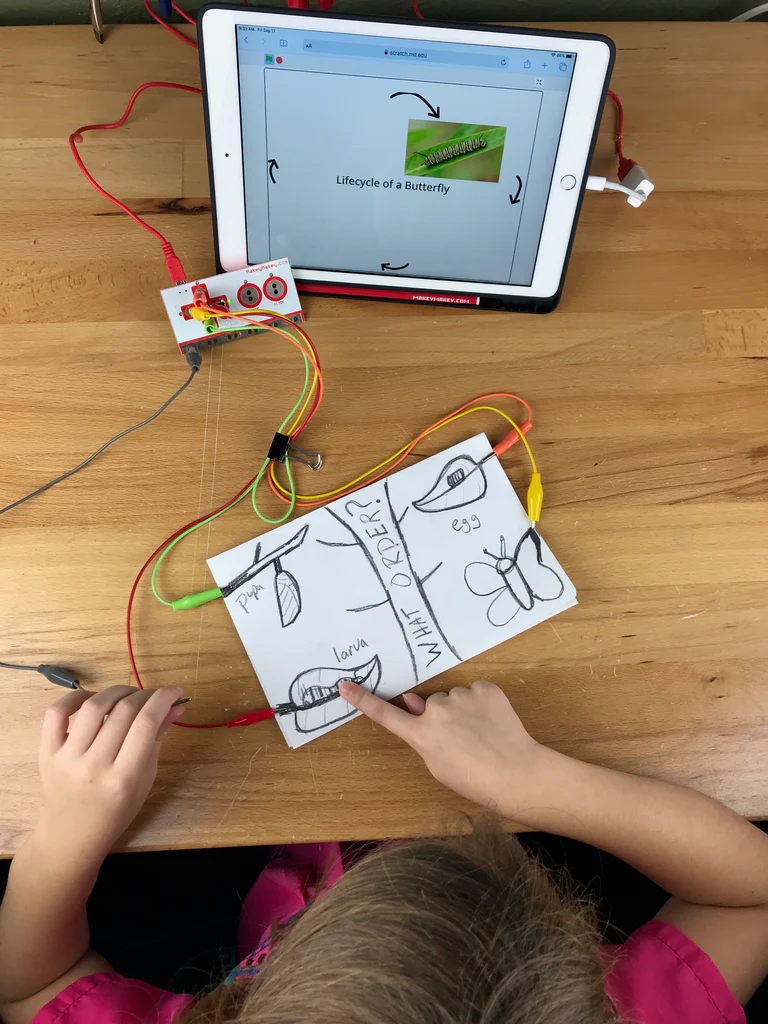
A first grader picks up a leaf. She touches it, and a word appears on the screen in front of her. She isn't reading at a page — she's reading with her hands. That's what researchers tested in a rural Turkish school: two first-grade classes, same literacy curriculum, but one group wired leaves, fruit, and stones to a Makey Makey and built their own reading games in Scratch.
That group came out ahead on reading comprehension, spelling accuracy, and reading speed — fewer spelling errors on every single assessment, with less than a 0.1% chance the speed gains were random. But the number that tells you the most isn't a test score. Nearly 9 out of 10 kids said the reading work was fun, and of roughly 20 parents surveyed, only one didn't think it helped their child.
Makey Makey doesn't replace phonics instruction — it gives reluctant readers a reason to keep practicing. Reading gains follow reading volume, and volume follows motivation. That's the mechanism this study is really documenting.
The Confidence Gap Closes When Girls Build Something Real
The STEM gender gap doesn't open in high school. It opens around age nine, when girls quietly start deciding that technology isn't really for them. This is the largest Makey Makey study ever conducted — 318 students, 12 schools across Barcelona, three years of data — and every cohort ran the same five-session design thinking workshop, prototyping with Scratch and Makey Makey.
Confidence rose for everyone, but girls' gains were roughly double the boys', with moderate-to-large effect sizes on design confidence and science engagement. And it wasn't only a feeling: afterward, girls were significantly more likely to go looking for science and technology information on their own. That's a behavior change, not a survey response — and behavior change is what predicts who stays in STEM.
If your district has an equity line item in its STEM plan, this is the study to bring to the table. It's longitudinal, it's large, it's peer-reviewed, and it shows the intervention working hardest for the students who need it most.
Hands on the Table, Not Eyes on a Screen
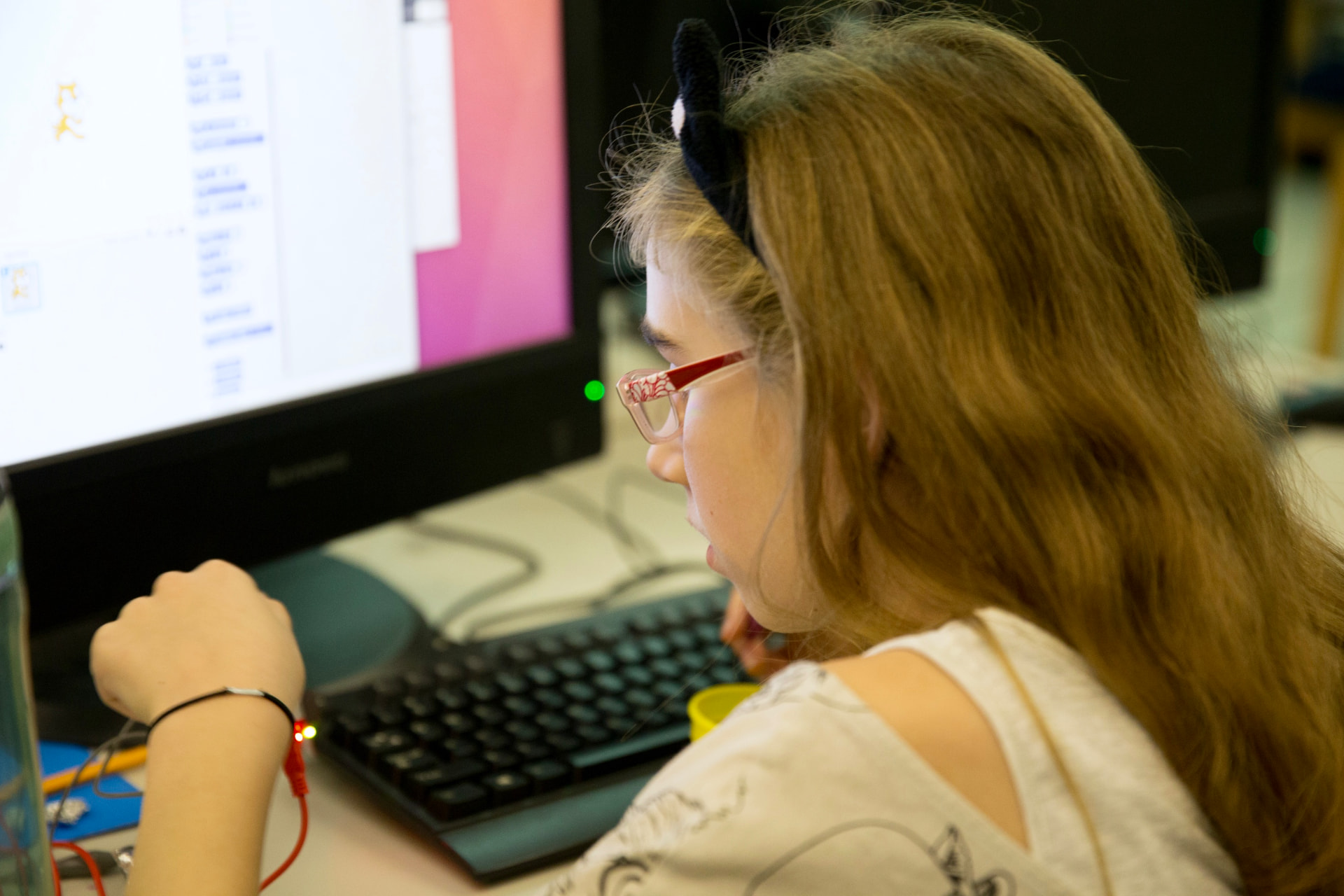
For a lot of students with autism or ADHD, the screen isn't the solution — it's part of the problem. So researchers built four games in Scratch and swapped the keyboard for a Makey Makey, letting sixty children in a randomized controlled trial navigate a memory maze by pressing physical objects instead of keys.
Average improvement in memory and concentration: 23.4 points, with all three ADHD subtypes gaining significantly. But the finding we'd point to first has no number attached — teachers and therapists consistently observed that children were less anxious with the physical interface than with screen-only tools. Tactile, predictable, real: the same qualities good ASD supports are built on.
Makey Makey is one of the few tools that works in the general ed classroom and the resource room, using the same kit. For SPED coordinators, that's a rare combination: an inclusion tool that doesn't single anyone out.
Creativity Isn't a Personality Trait. It's a Skill You Can Teach.
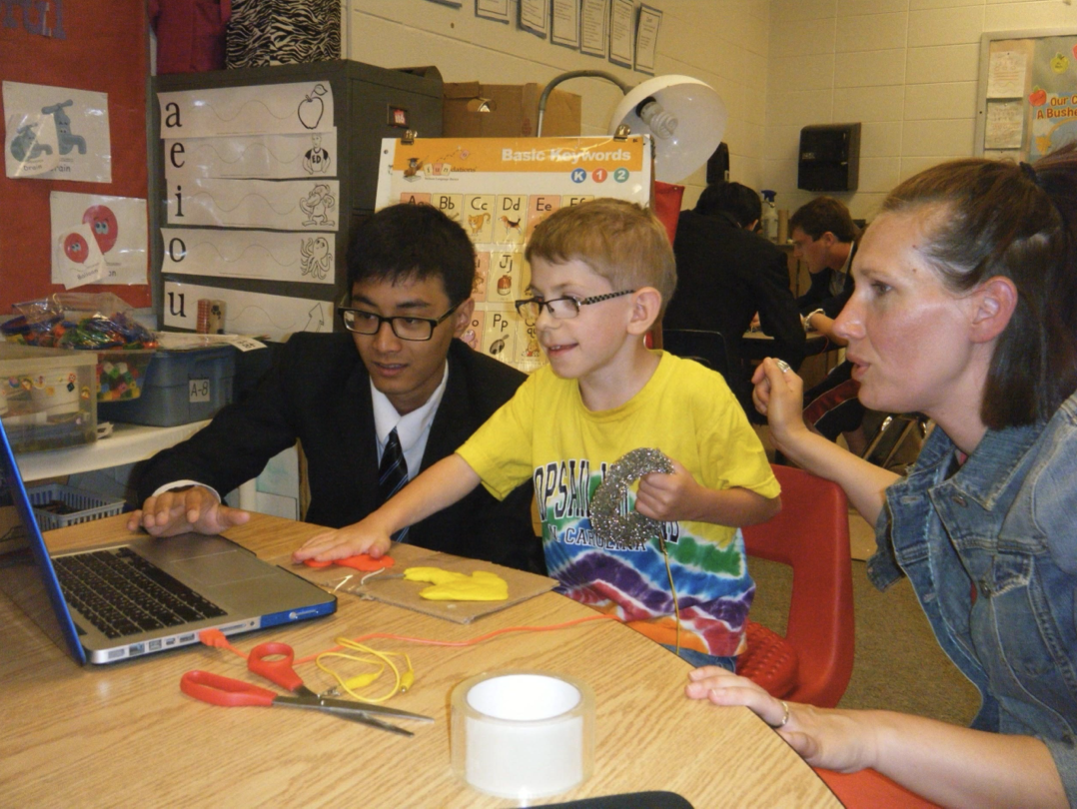
Everyone's strategic plan says “creative problem solving.” Almost nobody can show you a number proving they delivered it. Here, 249 secondary students in Hong Kong spent eight weeks designing musical instruments for someone else — young children, or older adults — researching real users before building working prototypes with Makey Makey and Scratch.
Measured before and after with a validated instrument, all four dimensions improved: originality, flexibility, fluency, and elaboration — then replicated across a second independent group. Because Makey Makey turns nearly any object into a trigger, students weren't picking from a menu of approved parts. The material choice was the design decision, which is exactly the open-endedness creativity research says you need.
When your board asks how you're actually developing 21st-century skills, this is a defensible answer with a measurement behind it — and a project format your teachers can run without specialized training.
Learning That Gets Kids Out of Their Chairs
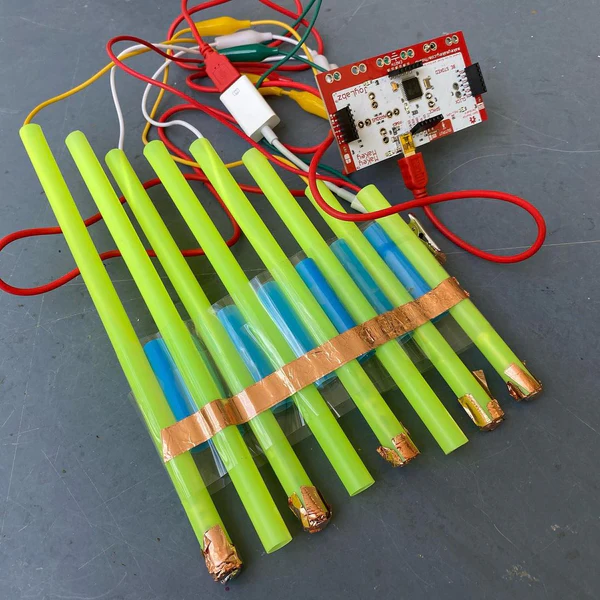
Thirty second graders. Foam figures of body parts scattered across the floor and tables, each one wired to a Makey Makey. A body part lights up on screen and the kids sprint, reach, and stomp to hit the match. Ten minutes a session, twice a week, for four months — and that duration is the point, because most classroom technology has a two-week honeymoon before the novelty burns off.
93.75% of students stayed in the high-engagement range across all 20 sessions. The strongest result was the relationship between motivation and learning outcomes: r = 0.897, close to a straight line. Kids who wanted to play, learned. That correlation is the whole argument for tangible tools in a single number.
Makey Makey is one of the only STEM tools that works in a gymnasium as easily as a computer lab. If you're trying to justify a kit purchase across more than one department budget, PE is an unexpected but well-evidenced ally.
Ten Minutes of Play Made Teams 143% More Original
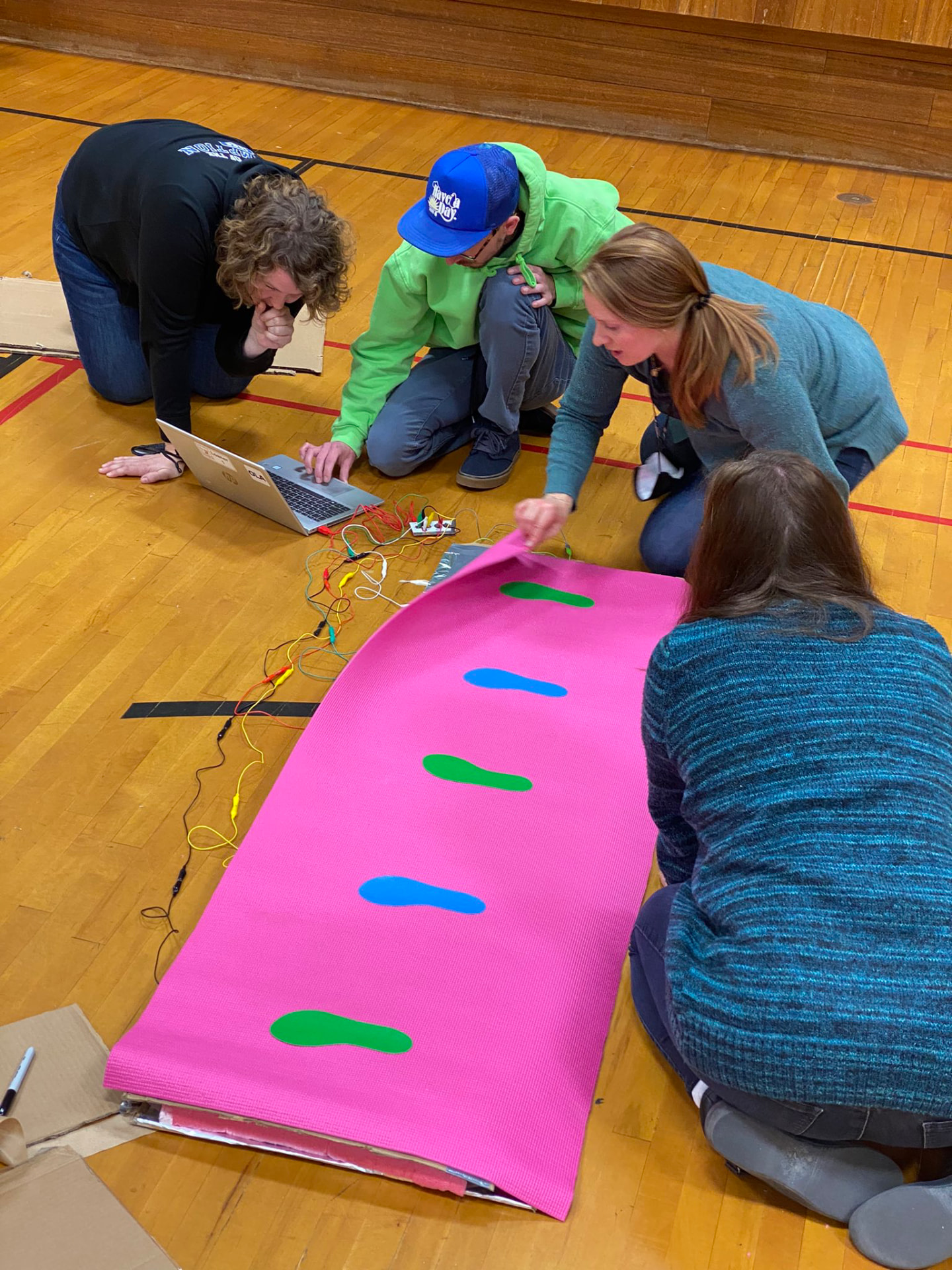
This one is almost unfair. Two sets of groups, one identical brainstorming task. The only difference: one set got ten minutes with a Makey Makey first. No instructions. No goal. Just mess around and see what conducts.
The primed groups produced 143% more genuinely novel ideas, scored 40% higher on originality, and 66% higher on connecting ideas across unrelated fields — at an effect size of d = 1.695. The total number of ideas barely moved, which is the interesting part: tinkering didn't make people louder in the brainstorm, it made their ideas better. And every experimental group had to be interrupted at the ten-minute mark. Nobody wanted to stop.
This isn't only a student finding. Put a Makey Makey on the table for the first ten minutes of your next PD day or curriculum planning meeting — the study's mechanism applies to adults, and it's the cheapest creativity intervention you'll find.
The Fastest Way Into Code Is Letting Kids Make Noise
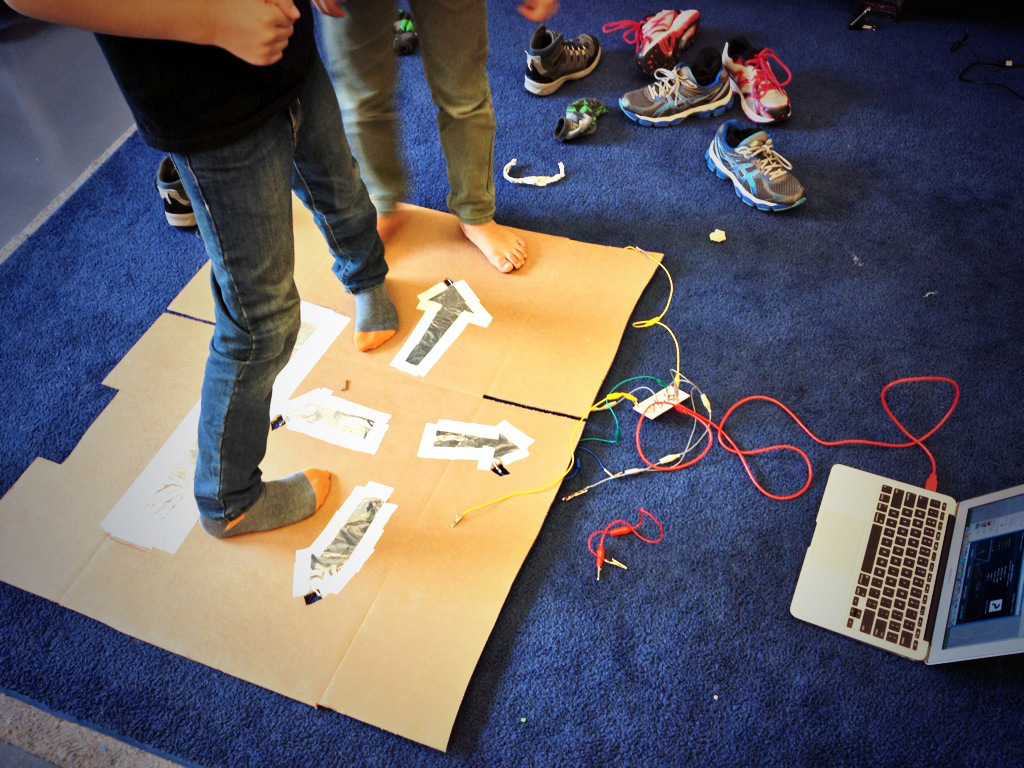
Twenty-five fifth graders. Eight hours across four weeks. Every one of them walked out with a working musical instrument they had designed, coded, and built — sounds programmed in Scratch, keys made of fruit, foil, and pencil drawings wired to a Makey Makey.
All 25 finished. All of them said coding with music beat coding on its own, and their interest in music rose alongside their interest in the technology. What researchers flagged as most significant: students began articulating on their own how music connects to math, physics, and engineering. The workshop ran on the 5E instructional model, which means a music teacher with no coding background has a familiar structure to teach from.
For any school defending an arts budget, this reframes music as a STEM ally rather than a competitor for the same dollars. One kit, two departments, one shared line item.
They Thought They Were Making Arcade Games
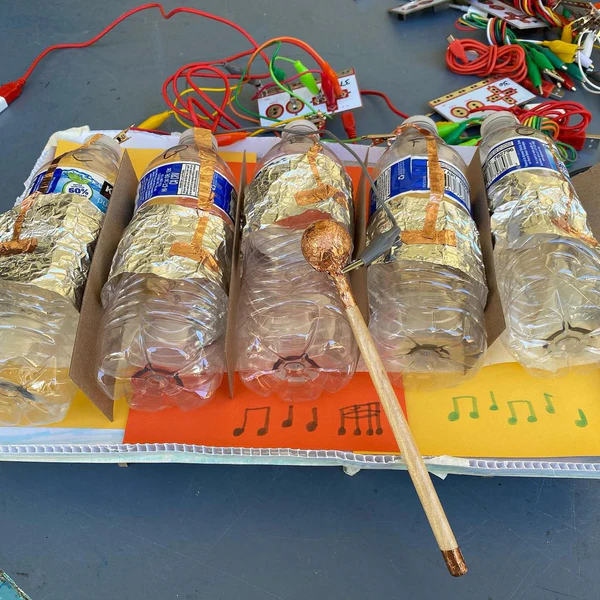
Eighteen middle schoolers remixed Scratch games, built physical controllers out of aluminum foil and Play-Doh, then ran a public arcade and watched younger kids play what they'd made. All 18 demonstrated mastery of sequences, loops, conditionals, variables, and event handling — not exposure, mastery, documented across two independent workshops.
Watching strangers play your game is a brutal, effective feedback loop. 70% of the arcade players asked for harder games, and four designers rebuilt their controllers on the spot. The moment worth telling your teachers about: mid-arcade, a student invented a conductive bracelet to solve the ground-wire problem. Nobody had taught them that — they hit a real constraint in front of real users and engineered around it.
If you need CS standards coverage without hiring a dedicated CS teacher, this is the format with evidence behind it. And the arcade doubles as a family engagement night — the kind of visible win that helps a program survive its second budget cycle.
Walnuts, Beans, and a 61% Jump in Math Scores
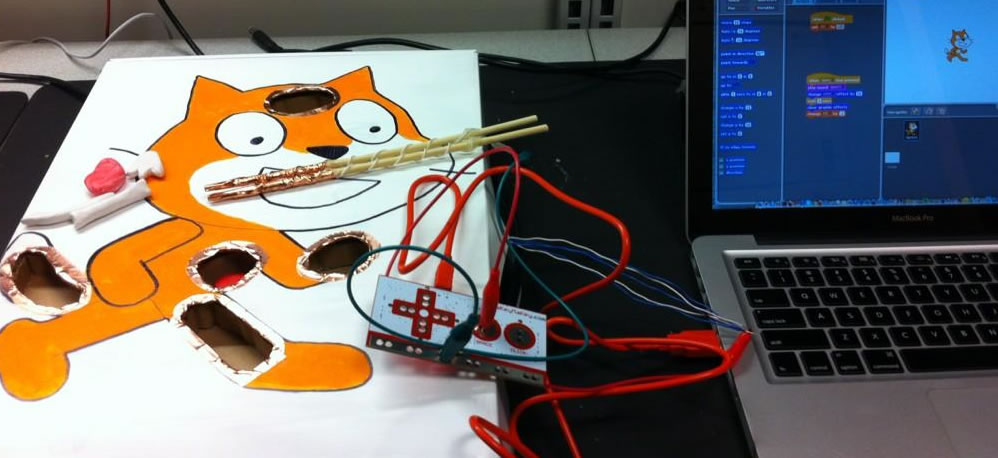
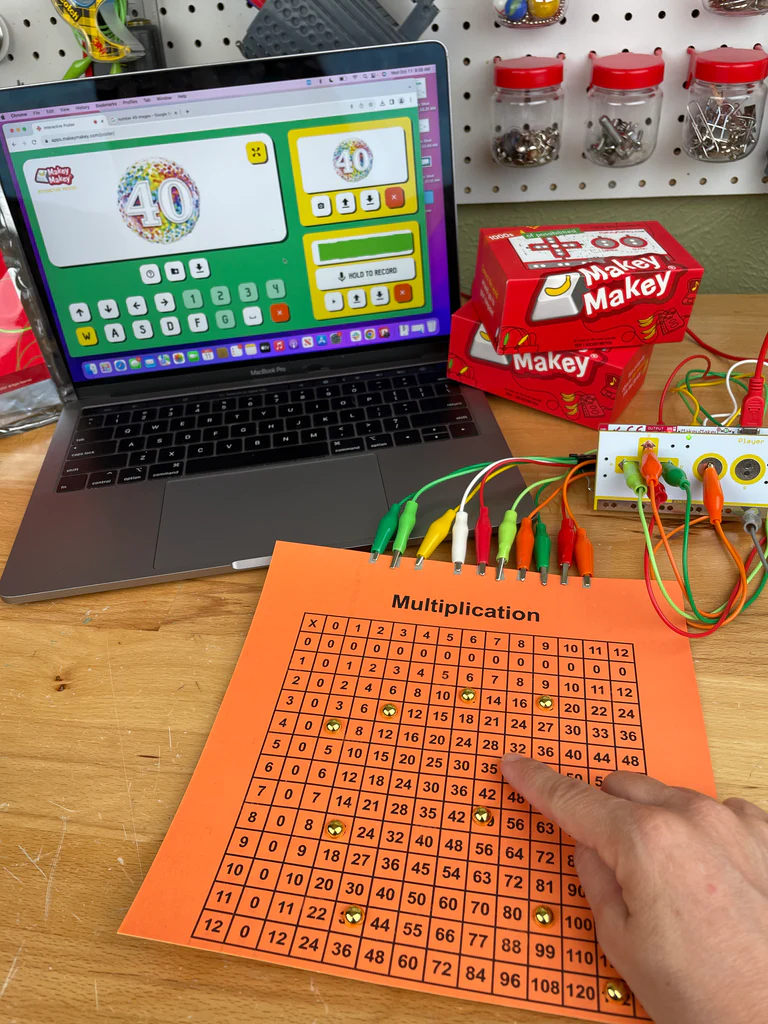
Third graders learning addition. One class used the textbook. The other used walnuts, eggs, and beans — real objects, wired to a Makey Makey, feeding into Scratch so the math they were physically arranging showed up on screen as they moved it.
Four weeks later the Makey Makey group scored 13.74 out of 20 against the control group's 9.68 — 61% higher, at an effect size close to unheard of in classroom research. Attitudes moved too, and in interviews not one student said anything negative about the approach. Manipulatives aren't new; third grade teachers have used counters for a century. What's new is manipulatives that respond.
This is the study to lead with in a budget conversation. Math achievement is the metric most districts are measured on, the effect size is large, and the materials cost almost nothing beyond the kit itself.
Why Makey Makey Works in the Classroom
Tangible Learning
Students connect physical objects to digital outcomes, bridging concrete manipulation and abstract thinking.
Open-Ended by Design
No single “right answer” means students explore, invent, and iterate — the engine of deep learning.
Curriculum-Aligned
Works across math, literacy, music, PE, and CS — one tool that earns its place in multiple classrooms.
Inclusive & Accessible
Effective across gifted students, students with disabilities, and diverse learning styles.
Measurably Effective
Controlled studies with pre/post assessments show real, statistically significant gains.
Fast to Implement
Teachers see results in weeks, not semesters. Impact documented after as little as 10 minutes of use.
“Students in the Makey Makey group showed visibly increased engagement and motivation — and parents overwhelmingly endorsed the approach. Only 1 out of 20 did not find it beneficial for their child.”
Ready to Bring This to Your School?
Get pricing for classroom kits, curriculum bundles, and professional development. Our team works directly with administrators and curriculum coordinators.