


Overview
Makey Makey Classic
Products
Grades 4–10
Grade Level
45 minutes
Time Required
Maker Class
Category
Difficulty
CSTA Standards
CCSS Standards
Create tilt sensors from recyclable materials that detect when an object is tilted! Use paper clips, foil, and cardboard tubes to build motion-sensitive switches for Makey Makey.
Learning Goals
- Understand how tilt sensors detect orientation changes
- Build a gravity-based switch using recyclable materials
- Test and calibrate tilt sensitivity
- Apply tilt sensors to interactive Makey Makey projects
Materials & Preparation
Materials Needed
- Makey Makey kit
- Alligator clips
- Cardboard tubes (toilet paper rolls)
- Paper clips
- Aluminum foil
- Small conductive balls or foil balls
- Tape
Preparation
Collect cardboard tubes and small conductive objects. Test a sample tilt sensor to confirm it works reliably. Open a Scratch project or Makey Makey app.
Build Activity — Step by Step
Explore Tilt Concepts
Discuss how tilt sensors work — gravity pulls a conductive element to connect two contacts when the sensor is tilted.
Build the Tube Sensor
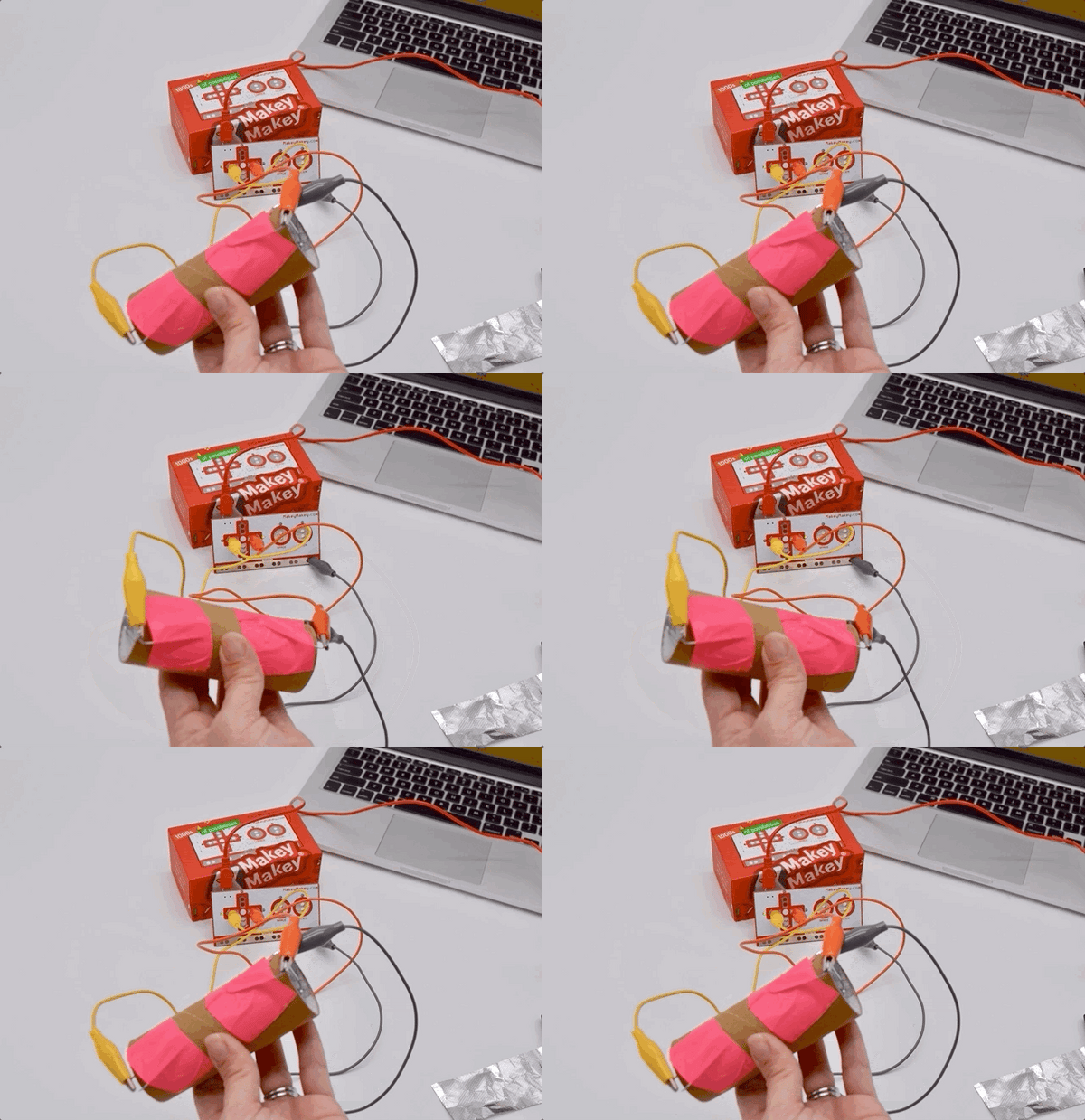
Line the inside of a cardboard tube with two separate foil strips that almost touch at the bottom. Insert a foil ball that rolls freely inside.
Wire the Contacts
Connect each foil strip to a Makey Makey input and EARTH using alligator clips. When the tube tilts, the foil ball rolls to connect both strips.
Calibrate and Test
Test the tilt sensor at different angles. Adjust the foil strip positions and ball size for reliable triggering.
Create a Tilt-Controlled Project
Use your tilt sensor to control a Scratch game, trigger sounds, or activate a Makey Makey app. Tilt to play!
Assessment
Students demonstrate their tilt sensor and the project it controls. Explain how gravity and conductivity work together. Evaluate sensor reliability and creative application.